


9 min read • By Dr. Kevin Baharvand, DMD, MS • Updated August 2026
The short answer
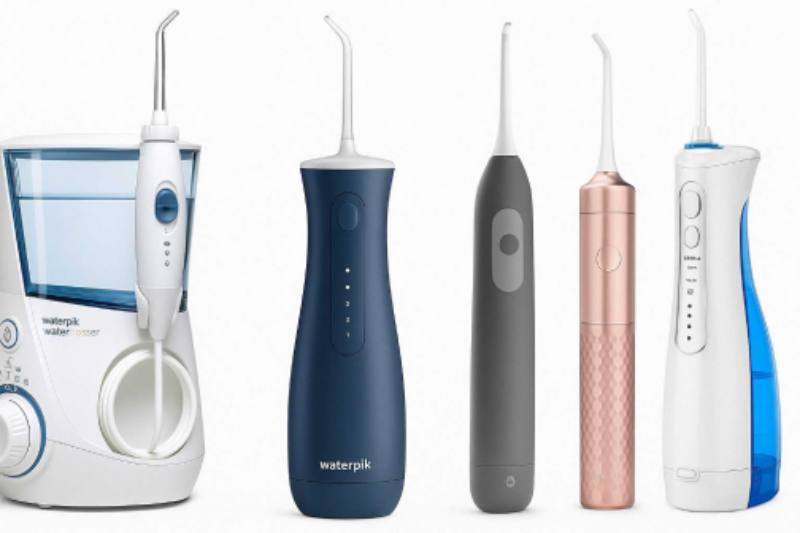
The best water flosser is the one that ends up on your counter instead of in a drawer, which usually means a countertop unit with a reservoir big enough to finish your whole mouth without a refill, an adjustable pressure range, and the right tip for whatever is in your mouth. Water flossers are excellent at reducing bleeding and inflammation at the gum line. They are not a straight replacement for string floss between tight teeth. Most people who benefit most from one have braces, implants, bridges, or gum pockets.
Every year there is a new round of best water flosser lists, and most of them are affiliate pages ranking whatever pays the most per click. So this is not a ranking. It is the set of things that actually differentiate one from another, from somebody who sees the results in patients mouths.
The short version: water flossers work, they work particularly well for a specific group of people, and the marketing overstates one thing while understating another.
Start with whether you need one at all.
On this page
Who actually benefits most
If you have a healthy mouth, tight healthy contacts between your teeth, and you already floss consistently, a water flosser is a nice extra. It is not going to change your life.
The people who see a real difference are the ones where string floss is either difficult or insufficient.
| Situation | Why a water flosser helps | What to look for |
|---|---|---|
| Braces or other fixed appliances | Floss threaders around a wire are miserable and most people quit. Water gets under the wire in seconds. | An orthodontic tip with a small brush at the end |
| Implants, bridges, crowns | You cannot floss under a bridge normally, and implants have a different tissue seal that responds well to irrigation | A standard tip plus a soft periodontal tip |
| Gum disease with deep pockets | Water reaches below the gum line where floss stops | Low pressure periodontal tip, and use it gently |
| Arthritis, limited dexterity, or a shoulder that will not cooperate | It requires almost no fine motor control | Countertop unit, longer handle |
| Kids who genuinely will not floss | A device that squirts water is a much easier sell at 8pm | Lower maximum pressure and a simple control |
| Dry mouth or heavy plaque buildup | More frequent mechanical disruption of biofilm | Bigger reservoir so you are not refilling |
Does it replace string floss? The honest answer
Mostly no, and the studies get quoted in both directions because a lot of them are funded by the companies selling the devices.
Here is how I would put it. Water flossers are very good at what they do best, which is flushing debris and disrupting bacteria along and just under the gum line. The evidence for reducing bleeding and gum inflammation is genuinely solid.
What water does not do is scrape. Between two teeth that touch tightly, there is a flat contact surface where plaque sticks, and physically dragging something across it is what removes it. Water goes around that contact, not through it.
So if your teeth have tight contacts and you are cavity prone between them, string floss is still doing something a water flosser is not. If your teeth have spaces, or there is hardware in the way, the water flosser may be doing more.
The version of this argument that actually matters: somebody using a water flosser every night is far better off than somebody who owns floss and does not use it. Consistency beats theory.
Do not buy a water flosser to get out of flossing. Buy one because it gets used, or because there is something in your mouth that floss cannot get around.
What actually differentiates one unit from another
Ignore most of the spec sheet. Four things matter.
Reservoir size. This is the sleeper feature. A small cordless tank runs dry in about forty five seconds, which is roughly half the time you need. People refill once, then start cutting the session short, then stop using it. A countertop reservoir holds a full minute or more.
Pressure range, especially the bottom end. Everybody advertises the maximum. What matters more is whether it goes low enough to be comfortable on inflamed gums, because that is when you will be starting.
Tips. An orthodontic tip if you have braces, a periodontal tip if you have pockets, a standard tip for everyone else. Check that replacements are actually available for the model, since tips should be replaced a few times a year.
The ADA Seal of Acceptance. It is voluntary and not every good product carries it, but it means the manufacturer submitted evidence to an independent panel rather than just running ads. You can look up which products carry it on the ADA Seal product list.
Countertop, cordless, or shower mounted
Countertop units have the biggest reservoirs and the widest pressure range, and they are the ones people stick with. The downside is counter space and a cord.
Cordless units are genuinely better for travel and for a bathroom with no outlet near the sink. The tradeoff is the tank. If you go cordless, plan on refilling mid session and accept that.
Shower mounted versions solve the mess problem entirely, which is the real objection most people have. Water flossing is messy for the first week until you learn to keep your lips almost closed and let the water fall out into the sink. In the shower, none of that matters.
There is no meaningful clinical difference between these. It is entirely about which one you will use.
How to actually use it
Most people who say it did not work for them were using it wrong.
Lean over the sink and put the tip in your mouth before turning it on. Start at the lowest pressure. Aim at the gum line at roughly a right angle to the tooth, not straight down between the teeth and not straight at the gum.
Trace along the gum line and pause briefly between each pair of teeth. The back teeth on the tongue side are the ones everyone skips and the ones that need it most.
Keep your lips almost closed and let the water run out into the sink. That is the whole trick to the mess.
A full mouth takes about a minute. If your gums bleed the first few nights, that is inflammation, not damage, and it usually settles within a week or two of consistent use. If it does not, that is worth having your gums looked at rather than turning the pressure down and hoping.
The three mistakes I see most
Cranking the pressure to maximum. Higher is not better. It hurts, it can push tissue away from the tooth, and it makes people quit.
Using it as a rinse. Aiming a jet of water around your mouth for ten seconds is not the same as tracing the gum line tooth by tooth.
Buying the smallest cordless model to save counter space, then abandoning it a month later because refilling it twice per session is annoying. This is the single most common way a water flosser ends up in a drawer.
Common questions
Is a water flosser as good as regular floss?
For gum inflammation and bleeding, the evidence is strong. For plaque on the flat contact surface between two tight teeth, string floss still does something water does not, because water goes around that contact rather than scraping it.
Can I use a water flosser with braces?
Yes, and this is where it helps most. Get the orthodontic tip. Threading floss under a wire is the reason most people in braces stop flossing entirely.
What pressure setting should I use?
Start at the lowest and work up only to what is comfortable. Maximum pressure is not a goal. If it hurts, it is too high.
My gums bleed when I use it. Should I stop?
Usually not. Bleeding in the first week or two generally reflects existing inflammation, and it typically improves with consistent gentle use. If it is still bleeding after a couple of weeks, get your gums evaluated.
Countertop or cordless?
Countertop if it will live on your bathroom counter, because the reservoir is big enough to finish in one pass. Cordless for travel or a bathroom with no outlet, accepting that you will refill mid session.
How often should I replace the tip?
A few times a year, and sooner if it looks worn or the spray pattern changes. Check that replacement tips are still sold for the model before you buy it.
Not sure whether you need one?
Bring it up at your next cleaning. We can show you on the screen exactly where plaque is collecting in your mouth, which answers the question faster than any buying guide.
You may also be interested in these
- How to clean a night guard
- Can you cure gum disease without a dentist?
- What is a deep cleaning of teeth?
About Tribute Family Dentistry
200+ five-star Google reviews • Family owned and independent • D Magazine Best Dentist 2026 • Living Magazine Readers' Choice 2026 • Se habla espanol
Tribute is a family owned, independent practice on FM 423 in Frisco. I own it with my wife, Dr. Julia Kang, DMD, MS. We both trained at Boston University and we are both members of the Omicron Kappa Upsilon national honor society. I am a Diplomate of the American Board of Orthodontics. Day to day, most patients and their kids see Dr. Christina Pham, DMD, our general and family dentist, and oral surgery is handled by Dr. David Roberts, DDS, who has been doing it for more than 35 years. D Magazine named me a Best Dentist for 2026, and Living Magazine readers voted us Best Family Dentist in Frisco and Plano the same year.
We handle the whole family in one place: cleanings and preventive care, fillings, crowns, bridges, implants, root canals, extractions and wisdom teeth, whitening, night guards, and emergency visits. We are open Monday through Friday, 8:00 AM to 5:00 PM, we speak Spanish, we work with most major insurance plans, and we run an in house savings plan for families without dental benefits.
If you need braces or clear aligners, that is the other side of what we do. Elate Orthodontics, our sister practice, treats kids, teens, and adults out of three offices in Frisco and The Colony.
Tribute Family Dentistry
5605 FM 423, Suite 600-B, Frisco, TX 75036
Book an appointment: (469) 598-1021
About the author: Dr. Kevin Baharvand, DMD, MS is a Diplomate of the American Board of Orthodontics and a national speaker on clear aligner treatment. His clinical work was selected for the cover of the American Journal of Orthodontics and Dentofacial Orthopedics. He and his wife, Dr. Julia Kang, own Tribute Family Dentistry and Elate Orthodontics in Frisco, Texas.
